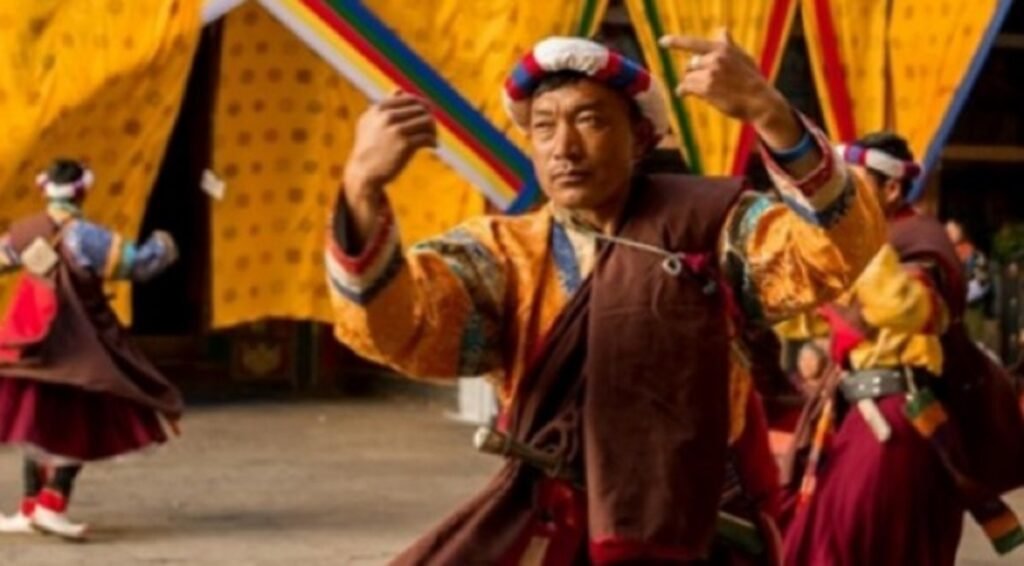
Zhey, meaning “dance”, is one of Bhutan’s traditional folk dances, combining rhythmic singing with energetic movements. Performed exclusively by men, the dance features a fixed number of steps, each carrying cultural or spiritual significance.
According to legend, Tshangpa Jarey, founder of the Drukpa Kagyu sect, created zhey to defeat a tortoise-shaped demon that was obstructing the construction of a temple. The tradition later became associated with the arrival of Zhabdrung Ngawang Namgyal in Bhutan in 1616, when local people welcomed him at Gasa by performing zhey.
Different regions have developed their own forms of the dance, with variations in steps, costumes and the number of performers. The four principal styles are Goen Zhey of Gasa, Wang Zhey of Thimphu, Nub Zhey of Trongsa and Wochubi Zhey of Paro.
Goen Zhey, considered the oldest form, traditionally features 21 dancers and 13 steps. Wang Zhey has 12 dancers and 14 steps, while Nub Zhey has 22 steps and Wochubi Zhey 18. The elaborate costumes and dance movements reflect Bhutanese Buddhist beliefs, history and cultural traditions.
Zhey is mainly performed during important religious and cultural occasions, including tshechus and traditional ceremonies.Visitors can experience performances such as Goen Zhey at Gasa Tshechu, Nub Zhey at Trongsa Tshechu and Wochubi Zhey at Paro Tshechu.