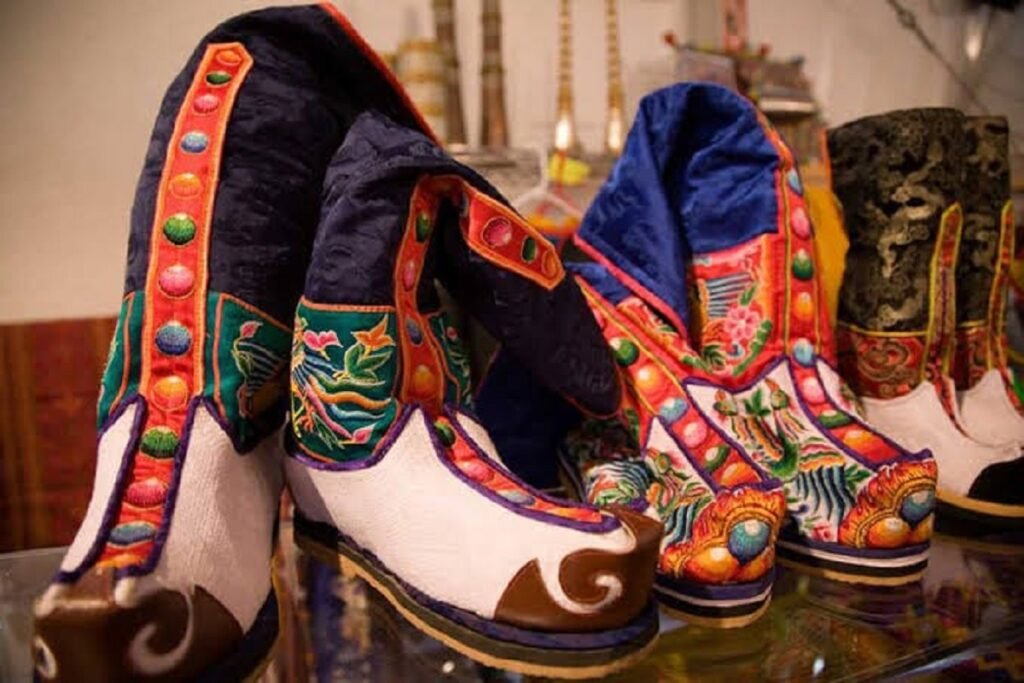
Bhutan’s traditional tshoglhams boots, known for their vibrant colours, intricate embroidery and distinctive upturned toes, are an important part of the country’s cultural heritage.
Traditionally worn by men during festivals, ceremonies and formal occasions, the knee-length boots are made from leather, silk, brocade and wool, with extensive hand embroidery. The colour traditionally reflects the wearer’s social status, ranging from green for ordinary citizens to yellow for the King or Je Khenpo.
The craft is believed to have reached Bhutan with the arrival of the Zhabdrung in 1616. However, declining demand and the popularity of modern footwear have placed the tradition at risk. Once nearly lost due to a shortage of skilled bootmakers, the tradition continues through these preservation efforts, although the boots are now mainly worn by senior officials, monks and traditional dancers.