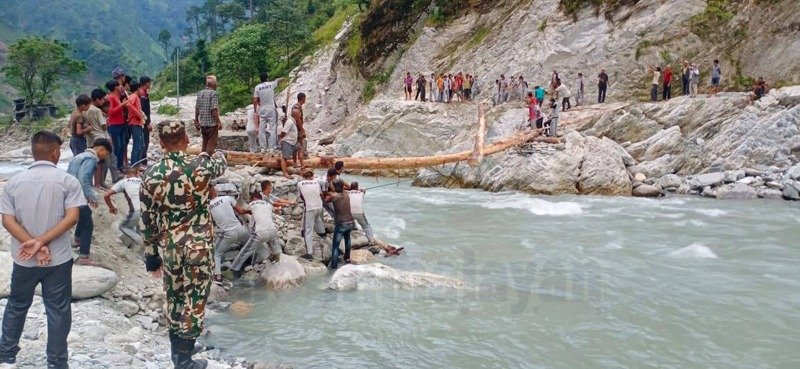
For the residents of Himali Rural Municipality–3, the simple act of crossing the river has become a life-threatening gamble. A suspension bridge over the Neti River, which was supposed to be a lifeline for the community, remains a skeleton of rusted potential more than 15 years after its inception. What began in 2067 BS as a two-year project under the Poverty Alleviation Fund has transformed into a symbol of administrative neglect and persistent hardship.
The financial history of the project paints a frustrating picture of stalled progress. Initially estimated at Rs 4.329 million, the budget was later revised to Rs 5.172 million to account for delays and rising costs. Despite records showing that over Rs 2.5 million has already been expended, the site sits abandoned. Construction materials, once intended to provide safe passage, now lie unused and weathered by the elements, while the bridge itself remains far from completion.
The human cost of this delay is devastating. In the absence of a permanent structure, locals are forced to rely on precarious, makeshift wooden bridges. Over the last decade, at least three individuals have lost their lives attempting to cross the treacherous waters. The danger does not subside during the dry season; records indicate that 13 people have sustained injuries in the past five years alone. When the monsoon rains arrive, the situation shifts from dangerous to desperate, as the temporary crossings are routinely washed away, leaving the community entirely cut off.
The impact extends beyond physical safety, deeply wounding the future of the village’s youth. Safe access to the local school is non-existent during the rainy season, forcing the institution to close its doors for up to four months every year. This seasonal isolation has created a significant educational gap, as students are sidelined by a lack of infrastructure that was promised to their parents a generation ago.
Local representatives and residents have made repeated appeals to various levels of government, but the project remains in a state of limbo. While funds were originally sourced from a mix of the Poverty Alleviation Fund, local government allocations, and community contributions, the project stalled when additional support failed to materialize.
Gobindra Bahadur Malla, Chairperson of Himali Rural Municipality, recently stated that coordination efforts are currently underway with both federal and provincial authorities. While there is renewed hope for a resumption of work, the people of Bajura remain skeptical. For them, the bridge is not just a matter of engineering or budgets—it is a matter of survival. Until the final cables are secured, the crossing of the Neti River remains a journey defined by fear rather than progress.