Bhutan is among the few countries globally that absorb more carbon than it releases. The Constitution mandates that most of its land stay forested for all time. Now, after its first nationwide survey, Bhutan knows there may be copper, tungsten, and other metals beneath that forest. While the Department of Geology and Mines (DGM) undertakes the survey’s ground validations, this possibility raises a policy question. Can a nation that built its name on conservation also become a mining country?
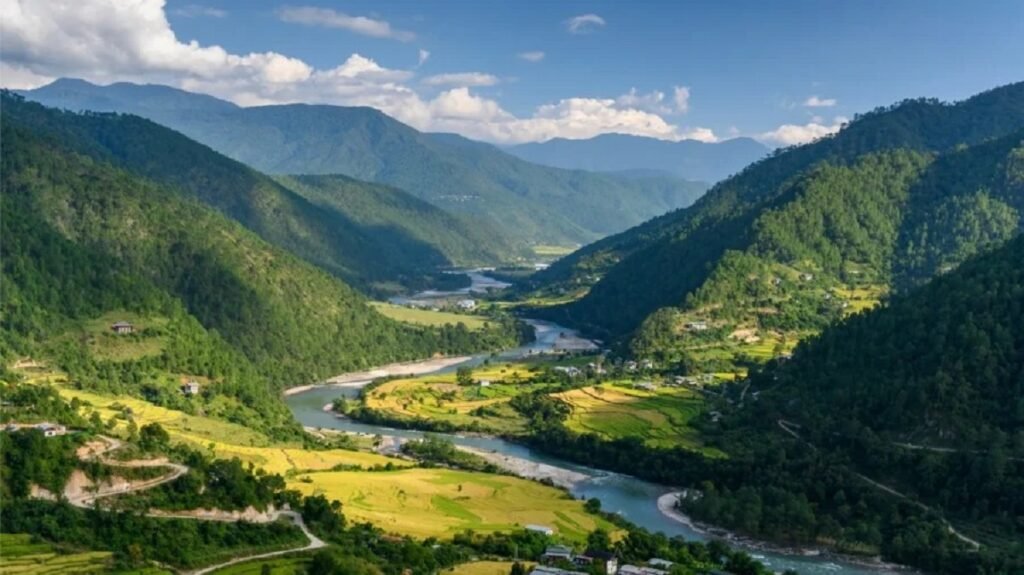
Bhutan’s green record is not a slogan. The Constitution requires at least 60 per cent of the country to stay under forest cover. Today, it is around 72 per cent. The country emits roughly one-and-a-half million tonnes of carbon a year, and its forests soak up more than six million.Conservation is not an add-on here. It is one of the four pillars of Gross National Happiness, the philosophy every government policy is measured against.
Mining sits uneasily beside all of that.
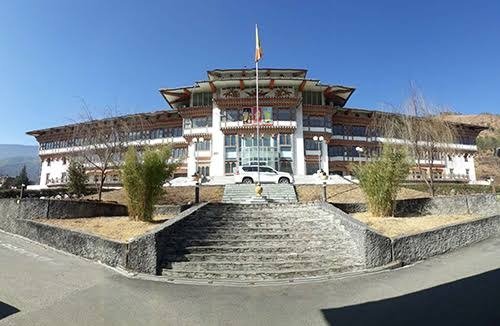
According to the Department of Geology and Mines (DGM), currently, mining permits require binding environmental, forestry and cultural clearances. Mining is barred inside protected areas. Operators must lodge an Environmental Restoration Bond before they begin. Besides restoration, the DGM’s Director General, Phuntsho Namgyal, says it has to happen during a mine’s life and not left to the end.
“The Department, or the regulator, holds the authority to suspend or terminate mining leases for non-compliance with these restoration requirements, or any other permit conditions.”
On whether Bhutan is even equipped for mining the recently indicated minerals, the Director General was candid. Bhutan has a mature industrial-mineral sector – dolomite, gypsum, limestone. But it lacks the infrastructure to mine metals like copper and tungsten. He says the country is prepared to form strategic partnerships to build that expertise, and points to the airborne survey itself as proof the Department can run complex work.