
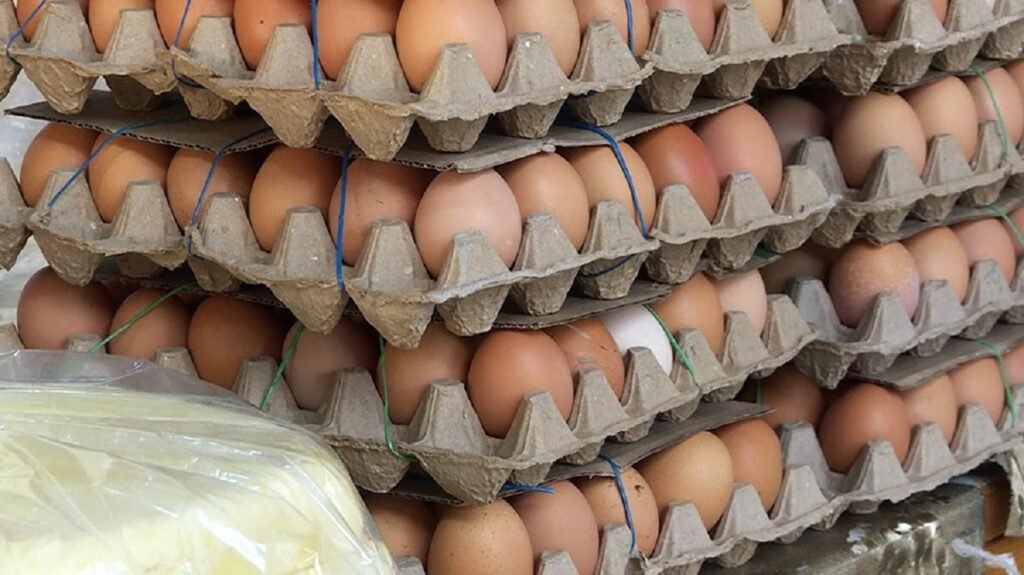
The rising price of eggs, which has seen a tray cost between Nu 580 and more than Nu 600, was questioned in the National Assembly, with MPs seeking clarification from the Minister for Agriculture and Livestock on the causes of the shortage and measures to stabilise supply and prices.
In February last year, a tray of eggs cost as little as Nu 280. However, prices have since increased by around 115 to 120 per cent.
Tashi Tenzin, MP for Radhi-Sakteng, Trashigang, said Bhutan has the highest egg prices among South Asian countries, according to the Competition and Consumer Affairs Authority.
Lhakpa Tshering Tamang, MP for Sergithang–Tsirang Toed, Tsirang, questioned the recurring challenges faced by farmers and consumers in the agricultural sector.
He said poultry farmers struggled to sell chicken during the COVID-19 pandemic. In 2024 and 2025, farmers faced similar difficulties selling eggs at as low as 280 Ngultrum a tray. Now, in 2026, farmers are struggling to sell pork, while consumers are finding it difficult to get enough eggs even at 560 Ngultrum or more per tray.
He asked whether the government sees the need for a stronger system to manage agricultural production, market demand and supply.
Meanwhile, Loday Tsheten, MP for Gangzur-Minjey, Lhuentse, questioned the government’s decision to allow only the Food Corporation of Bhutan (FCB) to import eggs when prices rose sharply due to high demand and inadequate supply.
He sought clarification on the losses incurred by FCB through egg imports and who would bear those losses.
Responding to the concerns, Agriculture and Livestock Minister Younten Phuntsho said the current shortage and rising prices were linked to challenges that began in 2021.
He said poultry feed contamination towards the end of 2021 led to the death of nearly 80,000 chickens. In addition, more than 400,000 chickens were also lost.
The shortage of eggs in 2022 pushed prices up, prompting many people to establish new poultry farms, while existing farmers expanded their production. This eventually resulted in excess egg production and a decline in prices.
The minister said that when egg prices fell in 2024 and 2025, the government continued supplying day-old chicks (DOCs), targeting production of around 450,000 eggs. However, many people did not take the chicks because they felt the prices were not profitable.
He said these factors further contributed to the current shortage. The cost of producing poultry feed has also increased due to inflation and the conflict in the Middle East.
As a long-term measure, the ministry has introduced a farm registration system to monitor production and help predict the quantity and timing of egg supply.
The minister said day-old chicks would continue to be supplied based on demand.
He also said FCB imported eggs on four occasions but had to stop after August due to lower demand for imported eggs.
Meanwhile, nine private individuals have been approved to import eggs into the country.