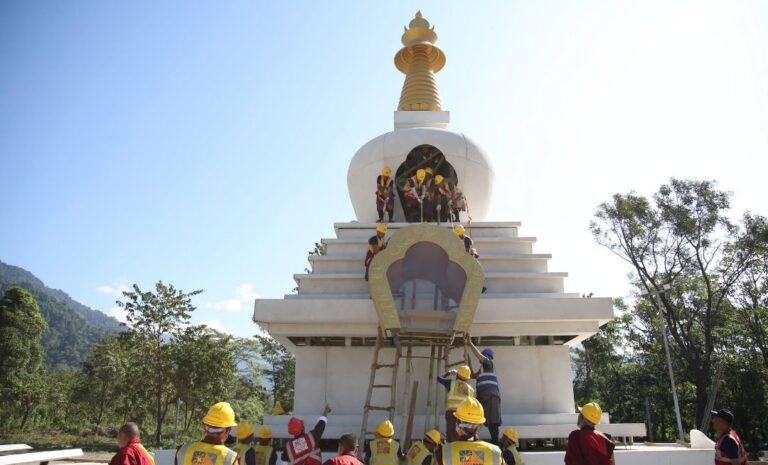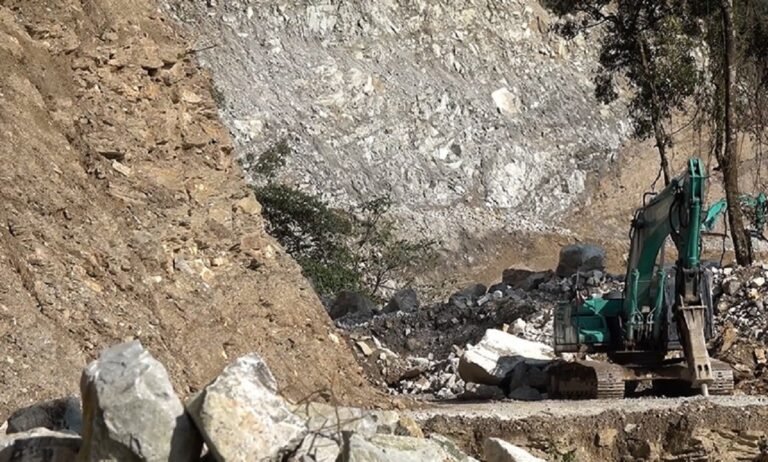
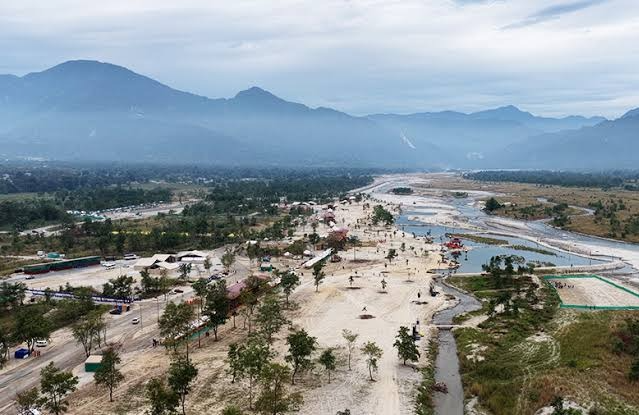
Bhutan experienced a poignant contrast between historic national unity and acute Himalayan climate vulnerability this week, as the kingdom celebrated a monumental spiritual milestone at Gelephu Mindfulness City while grappling with destructive glacial flooding in its northern highlands. On Sunday, tens of thousands of dedicated volunteers successfully completed the construction of 108 Buddhist stupas—each standing 15 metres tall—arranged harmoniously along a 12-kilometre stretch of riverbank near the Indian border within the emerging Gelephu Mindfulness City. The landmark consecration ceremony drew an extraordinary gathering of roughly 200,000 citizens, representing nearly one-fourth of Bhutan’s entire population and reflecting deep collective devotion to the transformative national project. Envisioned by His Majesty King Jigme Khesar Namgyel Wangchuck and master-planned by renowned Danish architects, Gelephu Mindfulness City is designed as an innovative economic hub rooted in Gross National Happiness, sustainability, and spiritual well-being, specifically aimed at generating domestic opportunities and curbing youth out-migration. Strategic infrastructure plans for the special administrative region include seamless rail connectivity linking the city directly to India’s railway network in neighbouring Assam, alongside a new international airport slated to commence operations in 2029. Yet even as southern Bhutan celebrated this forward-looking civic and spiritual achievement, the country’s fragile mountain ecosystem delivered a stark reminder of climate risks in the north. On Thursday night, a sudden glacial lake outburst flood triggered by the bursting of the Shintaphu glacial lake tore through the Gasa district, washing away vital bathing and hospitality infrastructure at the revered Gasa Tshachu natural hot springs. Although authorities confirmed that no human injuries or fatalities occurred during the nocturnal deluge, the surging waters obliterated sections of the crucial access road connecting the area to the remote highland village of Laya, isolating communities and disrupting local livelihoods. Together, these parallel events encapsulate the dual realities defining contemporary Bhutan—a nation boldly constructing a mindful, interconnected economic future anchored in cultural heritage and regional cooperation with India, while simultaneously confronting the escalating environmental hazards of rapidly melting Himalayan glaciers. By balancing visionary urban development in Gelephu with urgent disaster resilience and infrastructure recovery in Gasa, Bhutan continues to navigate the delicate intersection of progress, spirituality, and climate adaptation across its mountain landscape.