
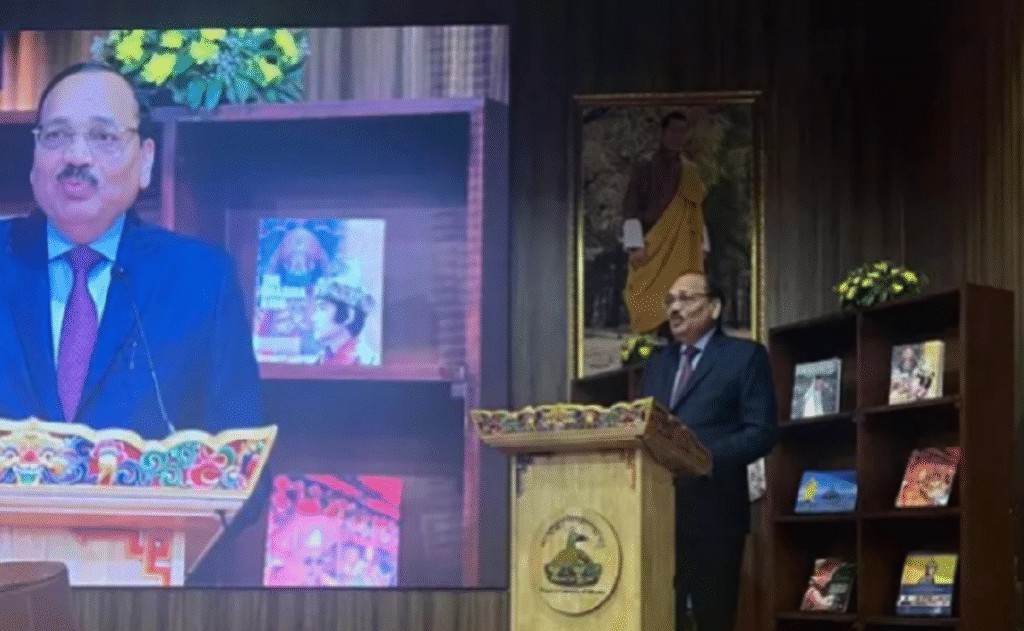
Chief Justice of India Surya Kant outlined a vision for technology-driven reforms aimed at enhancing access to justice in Bhutan during the “Wisdom for the Future – JSW Talk Series.” He proposed the establishment of “justice kiosks” in local administrative centers to facilitate court access for citizens in remote areas, suggesting the use of digital filing systems and tele-law services for simplified legal procedures. The CJI emphasized that technological advancements should not just digitize existing processes but democratize the judicial system, making legal resources more approachable. He noted the potential for bilingual digital filing in Dzongkha and English to mitigate barriers for ordinary citizens deterring from the judicial system due to perceived complexities.
CJI Surya Kant drew from India’s experience with judicial digitalization, highlighting that technology acts as a “force multiplier” by offering innovations like electronic filings and virtual hearings, which expanded access beyond traditional courtroom settings. He cautioned against the risk of excluding users who lack technological access or understanding, advocating for inclusive practices like translation tools to democratize legal proceedings. Further, he proposed the integration of legal technology education into law school curricula to equip future legal professionals with necessary skills.
Through collaborative efforts between the judiciary, legislators, and academic institutions, the CJI aims to create courts that prioritize people and facilitate justice in a manner reflective of cultural values, merging the Indian concept of Dharma with Bhutan’s legal traditions. He concluded that technological reform should serve to extend justice into the community rather than restrict it to formal judicial spaces.