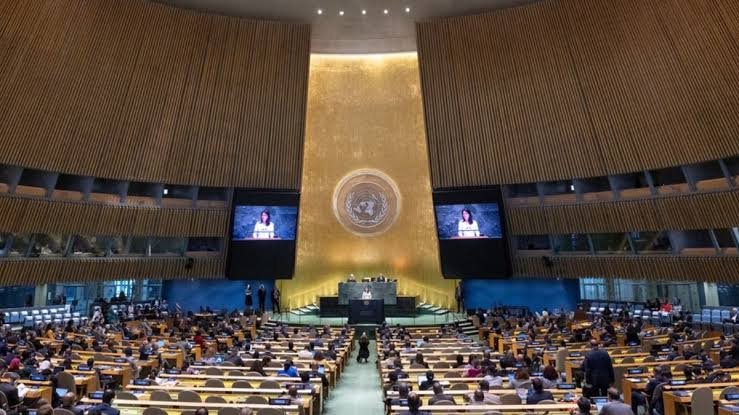
140 leaders and representatives from 53 other countries are gathering here for the annual high-level meeting. This meeting is taking place at a time when the world is grappling with several difficult wars and conflicts. The proceedings will begin on Tuesday with the traditional opening address by Brazilian President Lula da Silva, followed by a speech from US President Donald Trump. Discussions in the General Assembly Hall will cover issues such as the Gulf crisis, the war in Ukraine, the situation in Gaza, and the civil war—bordering on genocide—in Sudan. Key concerns this year will include the climate crisis, terrorism, global hunger and poverty, as well as the dangers posed by rapidly advancing artificial intelligence (AI). While the major speeches in the General Assembly Hall will inevitably feature grandstanding and mutual recriminations, they will also reflect a genuine understanding of global problems. However, the real work will take place in meetings held at diplomatic missions, hotels, and temporary cabins within UN corridors, as well as during informal encounters within the UN complex. Critics might argue that these speeches will not yield concrete solutions to the crises, but the parallel meetings accompanying the official high-level summit could produce tangible results. Speaking to journalists about the significance of this high-level week, Secretary-General António Guterres said, “I believe we should make the most of this week to facilitate as many meetings as possible between leaders who play a pivotal role regarding the crises we face.” He added, “I would like to remind you that last year, a crucial meeting took place between the US and several Muslim nations, which led to the creation of a peace plan for Gaza.” Even Trump, a long-time critic of the UN, appeared to agree regarding the utility of this session; he told reporters that the formation of a ‘Board of Peace’ for Gaza was the outcome of that very meeting held last year. Bangladesh’s Foreign Minister Khalilur Rahman, elected as the President of the General Assembly for the current session, will preside over the meeting from the elevated podium. The mission has announced that this year’s theme is: “Restoring trust, managing change: A UN that works for everyone.” When presidents, kings, prime ministers, and ministers take their turns to speak from the black marble podium bearing the UN’s golden emblem, three major leaders will be notably absent: Prime Minister Narendra Modi, Chinese President Xi Jinping, and Russian President Vladimir Putin. External Affairs Minister S. Jaishankar will deliver India’s address at the General Assembly on Saturday. Xi’s absence from the UN this week will be particularly conspicuous, given that he is visiting the US to meet Trump in Washington on Thursday. However, the presence of Iranian President Masoud Pezeshkian will be significant; he is scheduled to speak the day after US President Trump—the leader of a nation that stands in opposition to Iran in a conflict now entering its seventh month. Ukrainian President Volodymyr Zelenskyy will also be in attendance, representing a country enduring the fifth year of the Russian invasion. Meanwhile, on Thursday, Israeli Prime Minister Benjamin Netanyahu will take the podium to justify his country’s actions in Gaza—actions that have drawn widespread condemnation—even as the US denied a visa to Palestinian President Mahmoud Abbas.