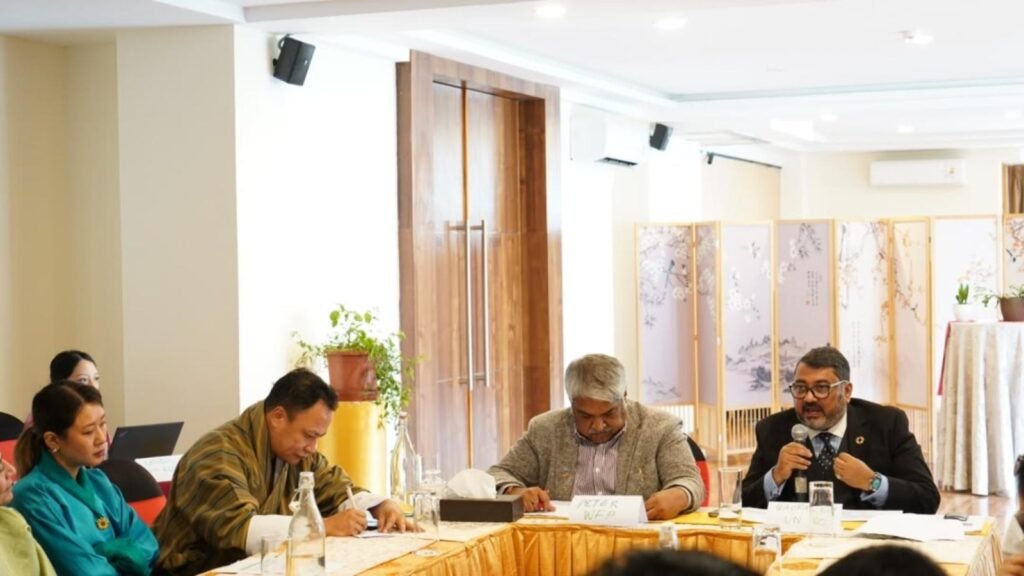
A five-day workshop in Thimphu explored the creation of an international alliance to promote Bhutan’s Gross National Happiness (GNH) framework as a model for well-being-centred development. The initiative comes as the United Nations and other countries seek broader measures of progress that go beyond traditional economic indicators such as Gross Domestic Product (GDP).
The discussions focused on strengthening global research, policy cooperation, and collaboration to place people’s well-being at the centre of development. Participants also examined how well-being could become a key foundation for the post-2030 global sustainability agenda and the next generation of Sustainable Development Goals (SDGs).
Vice-Rector of the United Nations University, Xiaomeng Shen, said Bhutan has earned global recognition for placing people’s happiness and well-being at the heart of governance. She noted that Bhutan is well positioned to play a leading role in shaping future international development policies centred on human well-being.
As an immediate outcome of the workshop, the United Nations University will collaborate with The PEMA Secretariat to pilot an adapted version of Bhutan’s GNH framework outside the country. The partnership also aims to establish a global Alliance for Research, Policy, and Practice and develop a research hub at The PEMA Secretariat.
The United Nations University reaffirmed its commitment to supporting Bhutan through research, capacity building, and international collaboration, further strengthening the country’s leadership in advancing well-being-centred development.