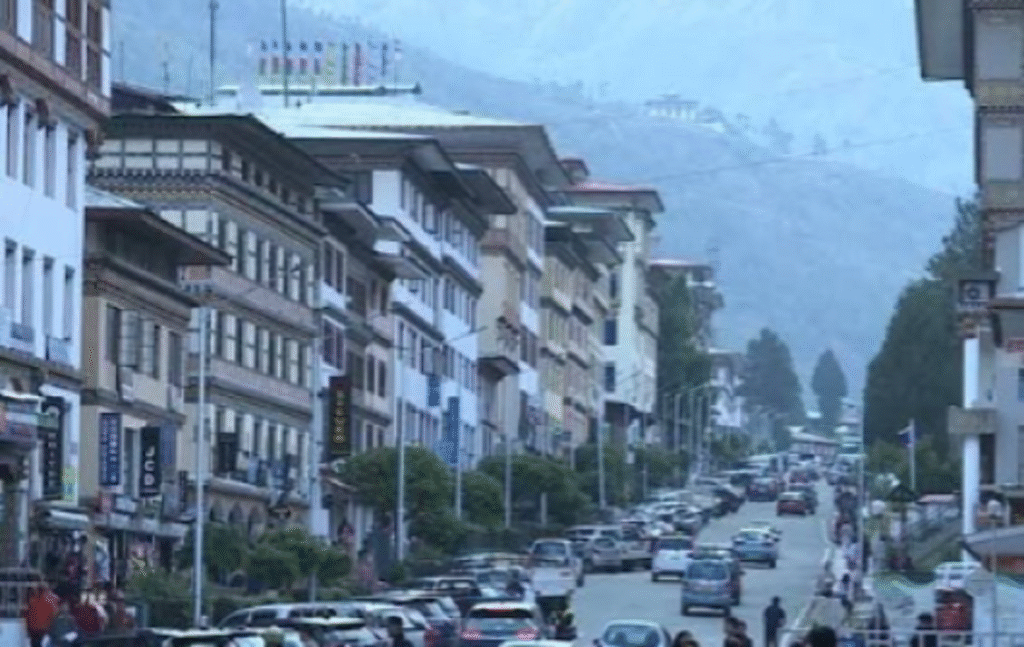
The first phase of the Fourth Local Government Elections concluded with two contrasting outcomes. While Thimphu voters placed their confidence once again in incumbent Thrompon Ugyen Dorji, residents of Phuentshogling voted for change, electing Deepen Ghalley as their new Thrompon.
The Election Commission of Bhutan (ECB) declared the official results on July 16 following polling held on July 15 in the two Thromdes. Along with the election of two Thrompons, voters also elected 12 Thromde Tshogpas who will be responsible for addressing urban development and local governance issues in their respective demkhongs.
In Thimphu, Ugyen Dorji secured a second term after receiving 1,846 votes against 1,082 votes polled by Sonam Choden, the first woman to contest the Thrompon post in the capital. In Phuentshogling, Deepen Ghalley won the election with 365 votes, defeating Tashi Wangchuk, who secured 217 votes.
The results reflected two different choices by voters. While Thimphu opted for continuity under an experienced leader, Phuentshogling signalled a desire for a fresh approach to local governance.
Soon after his victory, Deepen Ghalley thanked the people of Phuentshogling for placing their trust in him and pledged to serve with honesty and commitment.
“I sincerely thank all the voters of Phuentsholing Thromde for your trust and support. I am humbled by this opportunity to serve our community,” he said.
The Thrompon-elect pledged to work with dedication, transparency and integrity, assuring residents that he would devote his full efforts to improving municipal services and the overall development of the thromde. He said the progress of Phuentshogling would remain his foremost priority throughout his tenure.
In Thimphu, re-elected Thrompon Ugyen Dorji outlined a long-term vision for the capital, saying his administration would focus on building “an inclusive, equitable and resilient city.”
“If we achieve these three objectives, Thimphu will become a city where everyone wants to live and a developed capital that people aspire to visit and call home,” he said.
Both leaders had campaigned on addressing some of the most pressing concerns raised repeatedly by residents during the election campaign, including reliable drinking water, better municipal services, improved waste management and stronger urban infrastructure.
Although the elections concluded peacefully, they were marked by the lowest voter turnout recorded in the last three thromde elections.
According to the ECB, a total of 3,518 voters cast their ballots out of 10,370 registered voters in Thimphu and Phuentshogling, resulting in an overall turnout of 33.92 percent. Of these, 3,426 votes were cast through Electronic Voting Machines (EVMs) and 92 through postal ballots.
Phuentshogling recorded a turnout of 49.90 percent, with 583 of its 1,168 registered voters participating in the election. Thimphu, despite having 9,202 registered voters, recorded only 2,935 votes, giving the capital a turnout of 31.90 percent.
This year represent a significant decline compared, where voter turnout stood at 59.46 percent in 2021 and 37.25 percent in 2016.
Speaking during the official declaration of results, Chief Election Commissioner Deki Pema acknowledged that the declining participation was a concern for the Commission.
“We are very concerned and are making efforts to encourage more people to come forward and cast their votes. What is equally important is raising public awareness, and the media has a vital role to play in engaging and informing the public well before polling day,” she said.
She noted that local government elections have traditionally recorded lower participation than parliamentary elections but stressed that improving civic education would be essential to reversing the trend.
To strengthen voter awareness, the Commission also announced that it is developing a new digital platform that will enable voters to easily access information about candidates, their manifestos and the voting process. The initiative is expected to improve civic education and help citizens make informed decisions before casting their votes.
Despite the low turnout, women continued to play a leading role in the electoral process. According to the ECB, 1,913 women, representing 55.83 percent of all voters, cast their ballots compared to 1,513 men, who accounted for 44.16 percent of the turnout. Women also made history during the elections, with Sonam Choden becoming the first woman to contest the Thrompon post in Thimphu.
Of the 14 candidates contesting for Thromde Tshogpa seats across the two thromdes, six were women, and four were successfully elected, highlighting the growing participation of women in local governance.
The elections also witnessed participation across generations. Jimmy Norbu Dorji, aged 18 from Jungshina–Kawajangsa, became the youngest voter, while 95-year-old Phurba from the same demkhong was the oldest voter to exercise the franchise, demonstrating that Bhutan’s democratic process continues to engage both first-time and senior voters.
The ECB also ensured that no eligible voter was excluded. Special early voting arrangements were made for persons with disabilities, including doorstep voting services for two women in Thimphu. Postal ballot facilities were also provided for eligible voters, although the Commission reiterated that in-person voting remains the most secure and transparent method of voting.
The elections were conducted across 13 polling stations using 33 Electronic Voting Machines, with 182 election officials, observers and security personnel deployed to oversee the process. The Commission reported no major election disputes during polling, describing the overall conduct of the election as peaceful and orderly.
The Fourth Local Government Elections also introduced several reforms, including a five-year work experience requirement for Thrompon candidates, a revised Functional Literacy Test incorporating digital competency, expanded independent review of candidate manifestos and the pilot implementation of the Election Results and Administration (ERA) digital system. Bhutan also hosted its first International Election Visitors’ Programme, welcoming delegates from the Election Commission of India to observe the electoral process.
While the elections have produced new local leaders, they have also highlighted a growing challenge for Bhutan’s democracy. Local governments are responsible for decisions that directly affect citizens’ daily lives from water supply and roads to waste management, land use and public services. Yet nearly two-thirds of eligible voters chose not to participate.
With Thimphu choosing continuity and Phuentshogling embracing change, the focus now shifts from campaigning to governance. Residents will be watching closely to see whether the promises of transparent leadership, improved public services and sustainable urban development translate into tangible results over the next five years.