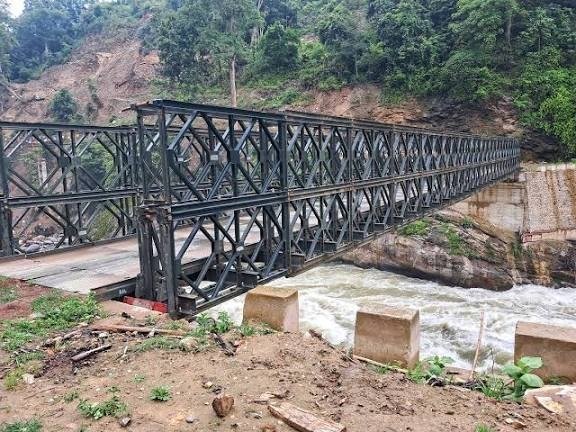
A newly constructed 150-foot-long Bailey bridge over the Mangde River at Bashaling has significantly improved access to vital farmlands for more than 70 households across three villages in Langthil Gewog, Trongsa. For years, the river created a formidable barrier between local farmers and their agricultural plots located in Nang Nang, where many families from the YungdrungCholing-Bayling area cultivate essential crops. Before the motorable bridge was built, residents had to rely on a basic suspension bridge, enduring arduous four to five-hour round-trip walks on foot while carrying heavy harvests, rice, and farm supplies on their backs. These tedious travel conditions made it extremely difficult for farmers to stay on-site to guard their crops, leaving wheat, buckwheat, and maize vulnerable to extensive damage from local wildlife. Built at a cost of nearly 23 million ngultrum with financial support from the Government of India under the High Impact Community Development Project, the construction took almost a year to complete and has fundamentally reshaped daily life for the agricultural community. According to local residents and YungdrungCholing-Bayling Chiwog Tshogpa Tenzin, the new infrastructure eliminates physical strain and opens up transformative opportunities for the agrarian economy. With motor vehicles now able to cross directly to the fields, farmers are planning to expand their cultivation activities, consider long-term seasonal stays near their crops, and utilize farm mechanization to increase yields and boost household incomes. Additionally, the bridge enables older or less mobile community members to travel conveniently by vehicle to assist with crop protection against wild animals. Overall, the completion of the Bashaling bridge marks a major milestone in empowering local livelihoods, enhancing food security, and strengthening community resilience across the region.