Farmers across southern Bhutan are facing growing uncertainty this agricultural season as relentless rainfall combined with sudden spikes in temperature continue to damage crops, disrupt livelihoods and increase financial pressure on rural communities.
In districts such as Samtse, where farming remains the primary source of income for many households, crops including ginger, maize, cardamom and vegetables are being severely affected by increasingly unpredictable weather conditions.
Local farmers say the situation has worsened in recent weeks, with heavy downpours followed by intense heat creating ideal conditions for crop diseases, soil erosion and pest infestations.
In Tashichholing Gewog under Samtse Dzongkhag, 66-year-old farmer Kamal Gurung pointed to visible damage in his ginger field.
“The rain is too much, and when the sun comes out, it becomes very hot. This sudden change is damaging the crops,” he said. “The ginger roots are rotting, and some plants are drying up because of the heat.”
Ginger, one of the region’s key cash crops, is highly sensitive to excess moisture and fluctuating temperatures. Farmers say waterlogging and sudden heat are accelerating fungal infections and root diseases, reducing both crop quality and yield.
Maize farmers are also struggling to cope with unstable weather patterns.
Kumar Ghalley, a farmer from Tendu, explained that continuous rain has weakened the soil structure, causing maize plants to collapse.
“Because of the heavy rain, the soil becomes too soft, and the plants start to fall,” he said. “Then when it gets very hot, the leaves begin to dry and curl. We are losing crops from both sides.”
He added that the changing climate has disrupted daily farming activities.
“It rains heavily, and then suddenly it becomes very hot. We cannot plan our work. Sometimes we cannot even go to the fields because of the rain, and when we can, the heat is too strong.”
In Tading Gewog, farmers have also reported rising cases of pests and plant diseases.
“The continuous moisture followed by heat is bringing more insects and plant diseases,” said farmer Dhan Maya. “Our crops are weaker, and they cannot survive these conditions.”
For cardamom growers, the economic impact is becoming increasingly alarming.
Nar Bahadur Rai from Norgaygang Gewog said farmers are worried about major financial losses this season.
“We depend on cardamom for income, but this year the production will be much lower,” he said. “We have already spent money. If the yield decreases, it will be difficult for us to manage our expenses.”
Apart from crop damage, the erratic weather is also affecting daily life in rural communities.
Persistent rainfall has turned roads muddy and slippery, making transportation and movement between villages difficult. Farmers say drying harvested crops has become nearly impossible due to continuous rain, while sudden heat waves make outdoor work exhausting.
Deepak Rai, a young farmer who recently returned to his village to pursue agriculture, expressed concern about the future of farming in the region.
“I came back to the village hoping to build a stable life through agriculture,” he said. “But now, with this kind of weather, it is very unpredictable. Too much rain damages the crops, and too much heat also damages them. It is becoming difficult to depend on farming.”
He added that the inconsistent weather is also reducing the quality of harvested produce.
“When it rains continuously, we cannot dry anything properly. And when the sun comes out, it is too hot and sudden. This affects the quality of whatever little we can harvest.”
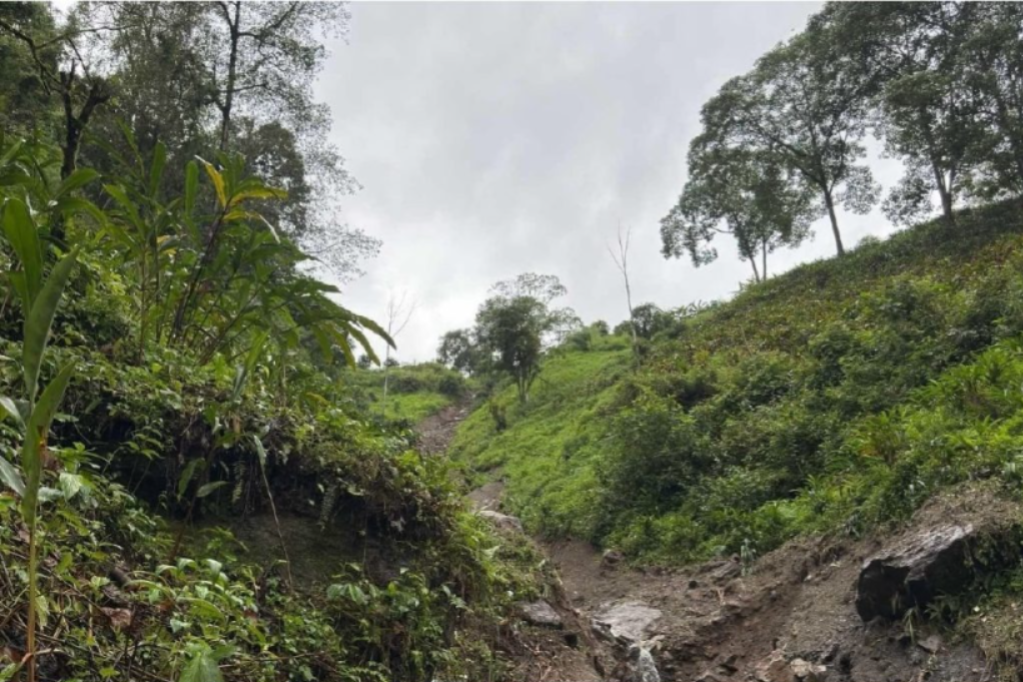
Across Norgaygang Gewog, the impact of changing weather patterns is becoming increasingly visible. Farmers report soil erosion, overflowing irrigation channels and scorched crops caused by intense heat after prolonged rainfall.
Many villagers say such extreme fluctuations were rare in the past.
“Earlier, the weather was more stable,” said farmer Dhan Kumar. “We knew when it would rain and when it would be sunny. Now, everything is changing. It rains too much, and then suddenly it becomes very hot.”
Agriculture officials in Bhutan have repeatedly warned about the growing impact of climate variability on farming communities, particularly in the southern belt, which remains vulnerable to monsoon rains and rising temperatures.
For now, farmers continue to monitor their fields and hope for more balanced weather in the coming weeks.
“We are just hoping for stable weather,” said Pema Tamang. “Not too much rain, not too much heat. That is all we need to save our crops.”