The Horticulture Association of Bhutan has partnered with Planethos Pvt. Limited to introduce high-efficiency electric cookstoves across Bhutan in an effort to promote clean energy use, improve public health and reduce carbon emissions. Supported by the Royal Government of Bhutan and the Government of Singapore, the initiative aims to reduce dependence on traditional biomass fuels such as firewood while supporting Bhutan’s environmental and climate goals.
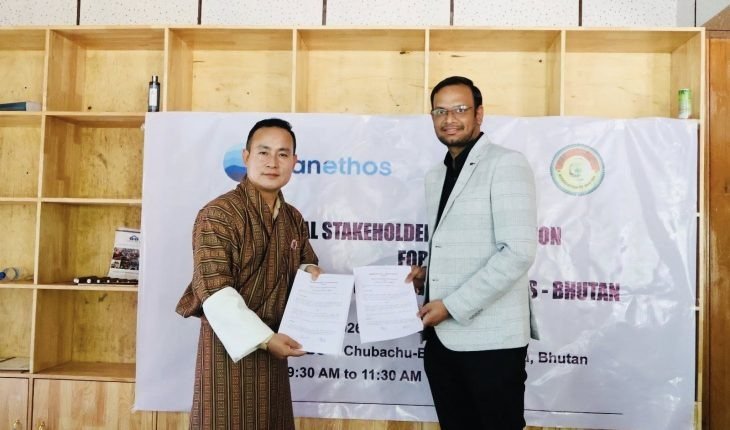
A stakeholder consultation on the Clean Cooking Project was held in Thimphu on May 19, 2026, where the two organizations signed a Memorandum of Understanding to formalize cooperation under the programme. The project will focus on distributing affordable induction cookstoves to households in rural and semi-urban communities, encouraging a shift toward cleaner and low-emission electric cooking technologies.
According to Tashi Gyeltshen, the initiative is expected to improve indoor air quality, reduce deforestation and support Bhutan’s transition toward sustainable energy use. He said the project could also help strengthen public health by lowering household exposure to smoke caused by traditional cooking methods.
During the consultation, stakeholders discussed both the benefits and challenges of adopting clean cooking technologies. While participants welcomed the environmental and health advantages, concerns were also raised about affordability and the infrastructure needed to support large-scale use of electric cookstoves in remote areas.
Under the programme, cookstoves will be distributed at subsidized rates to ensure they remain affordable for households. The initiative is also expected to reduce the burden of collecting firewood, particularly for women and children, while helping conserve Bhutan’s forest resources.
The project includes a carbon finance component that will allow participating communities to benefit from carbon credit mechanisms. By reducing household emissions, the initiative aims to generate verified carbon credits that could support local livelihoods and contribute to Bhutan’s commitment to maintaining its carbon-negative status.
Kanishk Porwal said the use of clean cookstoves could reduce nearly 1.2 tonnes of carbon emissions per household every year. He added that large-scale adoption of electric cooking technologies would play a major role in supporting Bhutan’s climate mitigation efforts and strengthening participation in international carbon markets under Article 6.2 of the Paris Agreement.
According to the company, Planethos has more than 15 years of experience in international carbon markets and has previously supported the distribution of over two million improved cookstoves across six countries. This experience is expected to support implementation and monitoring of the Bhutan initiative.
The HAB, which works closely with farmers and cooperatives in all 20 dzongkhags, will assist with awareness programmes, training and last-mile delivery of the cookstoves. A grievance redress mechanism has also been established to address concerns and ensure transparency during implementation.
The partnership is expected to support Bhutan’s long-term goals of improving household energy efficiency, reducing dependence on biomass fuels and strengthening sustainable rural livelihoods through clean energy and climate-focused development programmes.