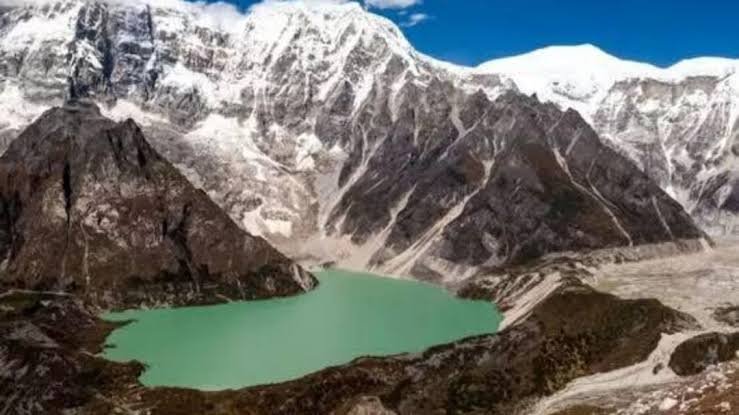
The Bhutan government has formed a high-level steering committee, headed by Prime Minister Tshering Tobgay, to oversee efforts to reduce water levels in 17 potentially dangerous glacial lakes across the country. The initiative aims to minimise the risk of Glacial Lake Outburst Floods (GLOFs), which can cause severe flooding and damage to downstream communities and infrastructure. Tobgay announced the formation of the committee at a press conference on Friday. According to Bhutan’s national newspaper Kuensel, the National Committee for Critical Glacial Lakes will coordinate and supervise the water-lowering operations. The work is expected to begin this winter, with the committee also discussing the required budget. The decision follows a glacial lake outburst at Shintaphu Lake in Bhutan’s Gasa district on October 29, which caused damage to roads, bridges and other infrastructure. Following the incident, the Prime Minister visited the affected area and inspected the control room of the National Centre for Hydrology and Meteorology (NCHM) to review the situation and assess disaster preparedness.
According to the Prime Minister, Bhutan has identified 14 glacial lakes that are particularly vulnerable to such outbursts, while the committee will oversee risk-reduction efforts covering 17 potentially dangerous lakes. The panel is expected to include representatives from the Royal Bhutan Army, Royal Bhutan Police, the Royal Office and relevant government agencies. Its primary responsibility will be to coordinate measures to gradually lower lake water levels through controlled discharge systems. Last week, Prime Minister Tshering Tobgay accompanied King Jigme Khesar Namgyel Wangchuck and NCHM glaciologists to inspect some of the high-risk glacial lakes. Officials from India’s Central Water Commission and West Bengal’s Irrigation Department have welcomed Bhutan’s initiative. An engineer from the state irrigation department said that although the recent glacial lake outburst did not cause any major impact downstream, several high-risk lakes are connected to rivers flowing towards North Bengal and Assam. Reducing water levels through controlled discharge could therefore help minimise the threat of future floods and protect vulnerable areas in the downstream regions.