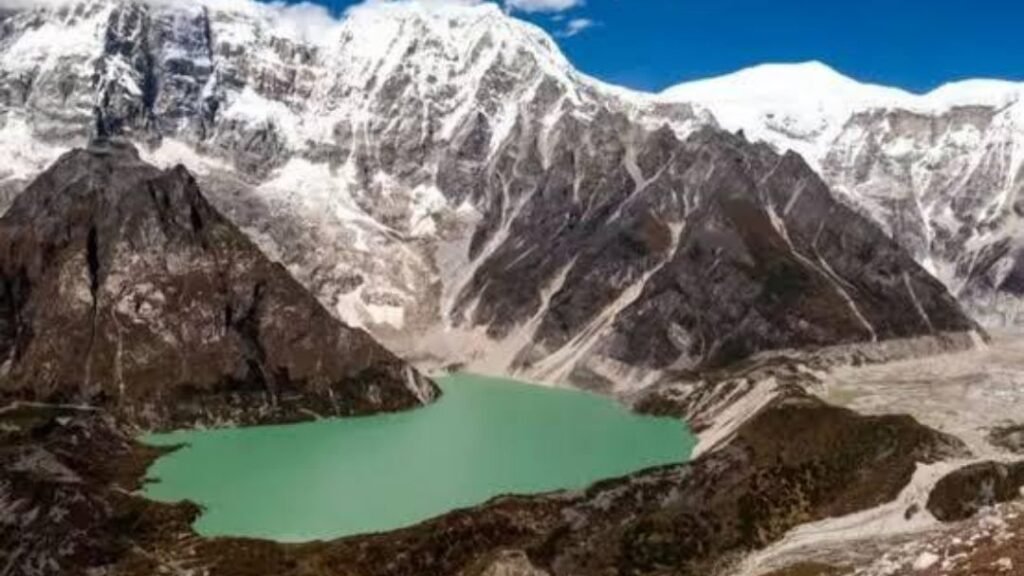
Bhutan has established a high-level steering committee, headed by Prime Minister Tshering Tobgay, to oversee measures aimed at reducing water levels in 17 potentially dangerous glacial lakes across the country. The announcement was made by Tobgay at a news conference on Friday. According to Bhutan’s official newspaper, Kuensel, the National Committee for Critical Glacial Lakes will coordinate the initiative and supervise efforts to minimise the threat of glacial lake outburst floods (GLOFs). The proposed work is expected to begin this winter, while the committee will also discuss the budget required for the operation. The decision comes after a GLOF occurred at Shintaphu Lake in the Gasa district on October 29, raising concerns about the possible consequences of rising water levels in vulnerable glacial lakes.
Following the incident, debris blocked a stream and led to the formation of an artificial lake at Takesemakhang. Tobgay visited the affected location to assess the situation and also inspected the control room of the National Centre for Hydrology and Meteorology. He said that 14 glacial lakes prone to such outbursts had been identified in Bhutan. The committee is expected to include military and police personnel, along with officials from the Royal Office, and oversee controlled water-release mechanisms. Last week, the Prime Minister accompanied King Jigme Khesar Namgyel Wangchuck and NCHM glaciologists during inspections of several high-risk lakes. Officials from India’s Central Water Commission and West Bengal’s irrigation department have welcomed the initiative, noting that controlled discharge could reduce risks to downstream areas, particularly North Bengal and Assam.