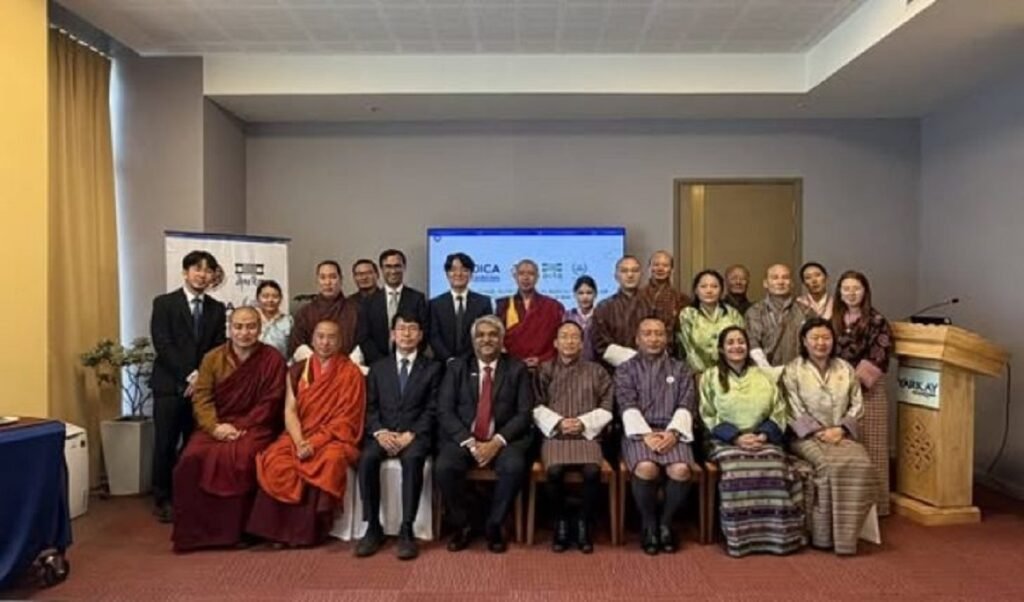
Over 100,000 children in Bhutan will have better access to wholesome school meals thanks to a USD 9.5 million agreement between the Korean International Cooperation Agency (KOICA) and the United Nations World Food Programme (WFP), which will also support local food production and rural livelihoods. Signed by WFP Country Director Peter Rodrigues and KOICA Bangladesh Country Director Mr. Jihoon Kim, the agreement represents a major step forward in bolstering Bhutan’s national school feeding program and enhancing nutritional status through locally sourced food, which in turn supports farmers’ incomes.
Over 175,000 people in Bhutan are expected to benefit from the initiative, which will assist over 100,000 students in government and monastic schools in partnership with several governmental organizations, such as the Ministry of Education and Skills Development, the Central Monastic Body, and the Ministry of Agriculture and Livestock. In order to improve meal quality and provide education on balanced diets, hygiene, food safety, and fundamental food production skills, the alliance intends to build and repair school kitchens and undertake agricultural programs in 13 districts.
With an emphasis on empowering women, who will make up at least 60% of those assisted, more than 2,000 farming households will also acquire necessary equipment, training, and skills to improve their productivity and entrepreneurship. Mr. Jihoon Kim highlighted that this partnership illustrates the multifaceted benefits of school feeding, combining improved nutrition for children with enhanced local food systems and rural livelihoods through investments in agriculture. The project aims to improve dietary diversity, food quality, and the consumption of nutrient-rich foods while addressing micronutrient deficiencies in school-age children.
Peter Rodrigues praised the partnership for turning school meals into catalysts for improved nutrition, eco-friendly school kitchens, and strong farm-to-school partnerships, guaranteeing that kids have better meals now while helping to secure livelihoods for agricultural communities in the future.