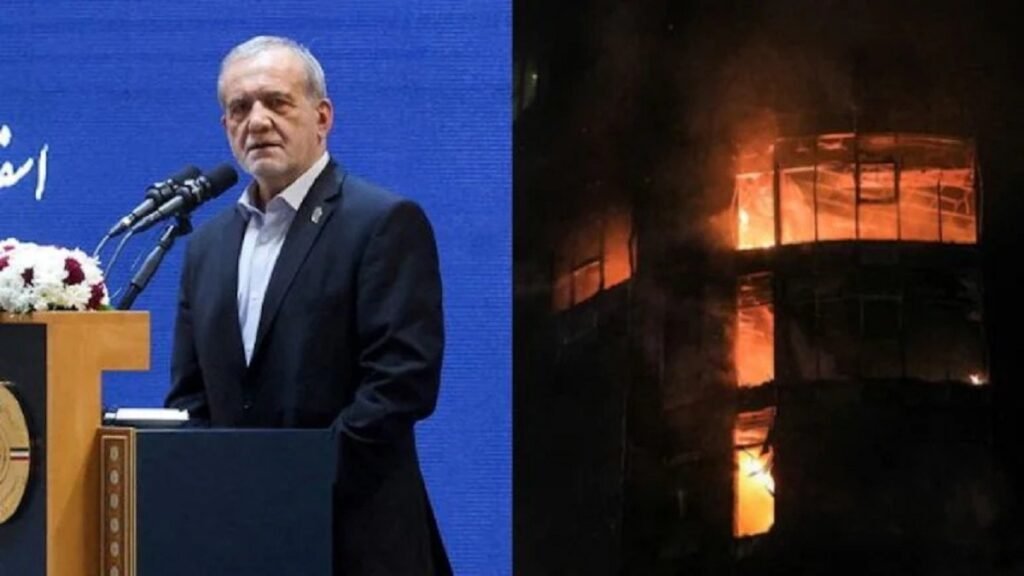
Iranian President Masoud Pezeshkian issued an apology to neighboring countries for attacks launched by Iran during its ongoing conflict with Israel and the United States. During his address broadcast on Iranian state television, he stated, “I must apologise on my own behalf and on behalf of Iran to the neighbouring countries that were attacked by Iran.” He assured that no further attacks would be initiated against these countries unless they instigate an attack on Iran first, asserting, however, that Tehran would not surrender, countering that “the enemies must take their wish for the surrender of the Iranian people to their graves.”
This statement follows a severe escalation of conflict, triggered by coordinated airstrikes conducted by the US and Israel on February 28, which aimed at various Iranian cities, including the capital Tehran. These strikes, termed ‘Operation Epic Fury’, resulted in the death of Iranian Supreme Leader Ayatollah Ali Khamenei and multiple family members. In retaliation, Iran has executed missile and drone strikes targeting Israeli and US interests across several Gulf states, including significant attacks near the world-renowned Dubai International Airport, which resulted in four injuries.
Furthermore, Iranian forces have claimed attacks on several high-profile locations, including the affluent Palm Jumeirah and Burj Al Arab, as well as a state-operated oil refinery in Bahrain. Recent reports indicate that hostilities have intensified with Iran launching missile strikes against Qatar, resulting in at least one missile landing at the Al-Udeid Qatari Base. Saudi Arabia has also reported thwarting missile launches aimed at installations housing US personnel and has experienced drone attacks targeting its oil sites, prompting a warning from Saudi Defense Minister Prince Khalid bin Salman for Iran to avoid any miscalculations in its military actions. This continuing cycle of aggression highlights the fragile and volatile nature of regional security amidst the backdrop of long-standing geopolitical tensions.