
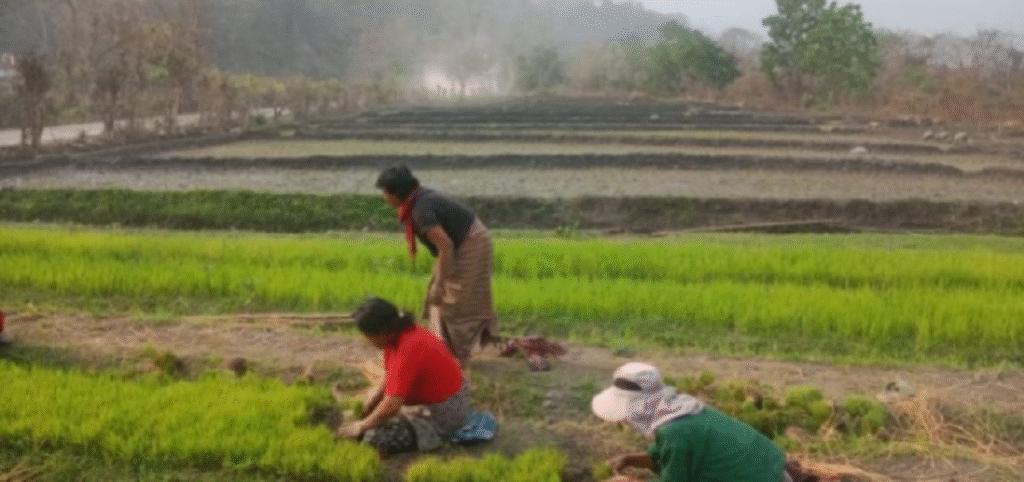
Farmers in Khamaedthang, located in the Phuentshogthang Gewog of Samdrup Jongkhar dzongkhag, have revived spring paddy cultivation after a seven-year hiatus, significantly enhancing rice production and food security in the region. This development allows local farmers to cultivate rice twice yearly, setting them on a path toward self-sufficiency. The revival is attributed to the construction of a smart irrigation channel completed last year, which provides a consistent water supply—previously a major barrier to farming in the area.
Farmers have already commenced transplanting paddy seedlings, with expectations for harvesting from May to June. Following this harvest, they will prepare for summer paddy transplantation due to begin in July. The new irrigation system has fundamentally transformed farming practices, as illustrated by Dorji Gyeltshen, who expressed that adequate water supply enables double cropping, fulfilling household rice needs even without market sales. Tulasa Tiwari highlighted how the irrigation channel’s construction had prevented paddy cultivation last year, forcing families to purchase rice, emphasizing the vital role of having reliable irrigation.
Local farmer Mindu Lhamo underlined the importance of spring paddy cultivation in ensuring food security, suggesting that successful double cropping would eliminate the need for external rice purchases. Karma Namgyal, the chiwog Tshogpa, noted that 70 households plan to cultivate spring paddy this year across 50 acres of agricultural land, stressing the irrigation channel’s pivotal role in making such endeavors feasible.
Despite this optimistic outlook, farmers also acknowledge the challenges of cultivating spring paddy, which demands substantial effort and management of overlapping cropping seasons. New farmer Karma Dorji expressed hope tempered by uncertainty regarding his first harvest, while Thinley Wangdi pointed out the demanding nature of managing both spring and summer transitions. The timing of the spring harvest coinciding with the onset of the rainy season adds complexity to farming tasks, as noted by Tulasa.
Nevertheless, optimism prevails in Khamaedthang regarding the future of spring paddy cultivation. The community believes that a successful harvest will encourage further adoption of double cropping, reinforcing the hope that improved irrigation and favorable conditions will bolster food self-sufficiency for the villagers.