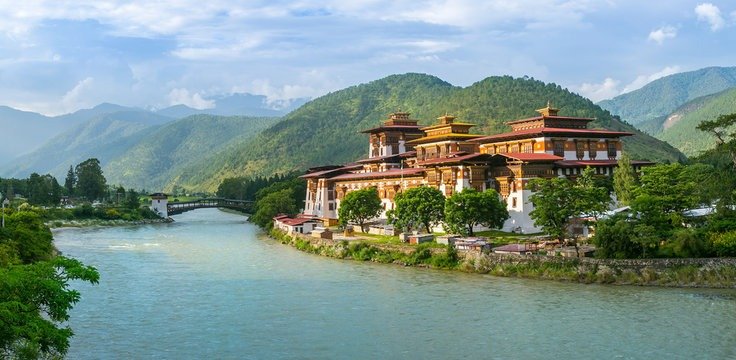
Punakha Dzong, also known as Pungthang Dewa Chhenbi Phodrang, is a prominent architectural marvel located at the confluence of the Phochhu and Mochhu rivers in Bhutan. Constructed in 1637/38, it is the second-oldest and the second-largest dzong in the country, having historically served as the capital until 1955. This structure has been central to significant royal ceremonies and pivotal spiritual events throughout Bhutan’s history.
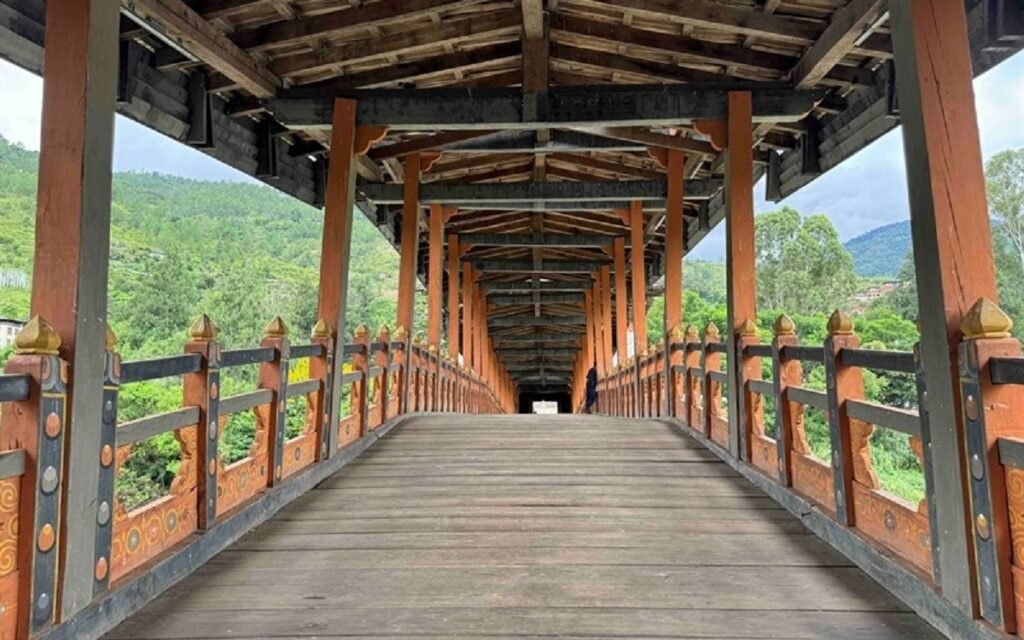
The dzong faced adversity when a severe glacial lake outburst flood struck in 1994, resulting in considerable damage. However, Bhutan’s commitment to preserving its heritage led to a meticulous restoration process, which culminated in the reinvigoration of the dzong’s original splendor by 2003. Alongside the dzong, the flood also destroyed the historic Bazam, a traditional cantilever bridge that linked the dzong to the main road across the Mochhu. The rebuilt Bazam is celebrated as the longest wooden cantilever bridge in the world, showcasing remarkable Bhutanese craftsmanship and engineering ability.
Punakha Dzong not only serves as a link between the past and present but also stands as a resilient symbol of faith and architectural genius at the heart of Punakha. For over three centuries, it was Bhutan’s governmental epicenter and continues to function as the summer residence for the Zhung Dratshang (Central Monastic Body).
The evolution of Bazams in Bhutan arose from practical needs, as traditional wooden bridges could only span limited distances. For instance, the Wangdue Phodrang Bazam, built in 1684, had a span of 52 meters but was lost to floods in 1968. Current Bazams, including those near Thimphu, Paro, and Trongsa Dzong, still serve vital connectivity functions within the country.
Bazam refers to traditionally designed wooden cantilever bridges, which, at times, were reinforced with iron chains. These structures symbolize Bhutan’s cultural heritage, facilitating connections between communities while exemplifying traditional craftsmanship. The original Bazam fell victim to a flood in 1958, and its reconstruction efforts from 1958 until 2008 faced significant challenges, particularly in replicating its intricate design and craftsmanship.
Between floods, a temporary steel cable bridge provided access to the dzong until the new Bazam was constructed. This new bridge, initiated by Pro Bhutan under Prime Minister Sangay Ngedup, began construction in 2008, featuring a 56-meter span while maintaining an appearance of authenticity and historical resonance. The project generated considerable public and private support, costing around €850,000, with significant assistance from Germany.
The new Bazam, inaugurated in May 2008 by Jigmi Y. Thinley and Harald N. Nestroy, retains its title as the longest wooden bridge with an unsupported span, due to the combination of traditional building techniques and modern enhancements to ensure stability and resistance against potential floods. Both Punakha Dzong and Bazam stand in a region susceptible to environmental threats but represent remarkable achievements in engineering and cultural preservation, highlighting the balance of preserving traditional architecture while incorporating modern safety designs.