
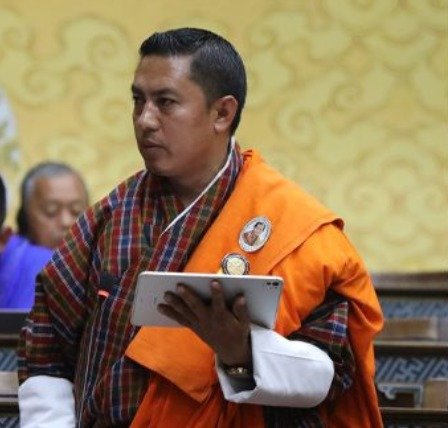
During the National Council’s Question Hour on 3 December 2025, Home Minister Tshering outlined key reforms aimed at strengthening Bhutan’s disaster management system. His remarks responded to concerns raised by Eminent Member Kesang Chuki Dorjee, who pointed to heavy losses from recent climate-driven disasters—including the 5 October flooding caused by Cyclone Montha—and highlighted delays in alerts, weak coordination, and unclear funding mechanisms.
Lyonpo Tshering explained that Bhutan’s disaster governance is rooted in the Disaster Management Act 2013 and its accompanying regulations, with responsibilities distributed across national and local bodies. However, he acknowledged ongoing challenges such as fragmented mandates, inconsistent information-sharing, and limited authority of the DLGDM to enforce coordination. Disaster risk is still not fully integrated into development plans, leading to insufficient resources for preparedness.
To address these gaps, the government is developing a National Emergency Operation Center in Lungtenphu and working to establish DEOCs in dzongkhags. Communication systems are being expanded through additional repeater stations, STARLINK terminals, bulk SMS alerts, and improved early-warning coverage. New contingency plans, beginning with Thimphu’s earthquake plan, are also being finalized to strengthen nationwide readiness.