As Bhutan revitalizes its tourism sector, a range of community-led festivals is emerging, complementing the traditional tsechus and offering travelers deeper insights into Bhutanese life from April to November.
In April, the Rhododendron Week (3–9) in Trashigang celebrates Bhutan’s rich biodiversity, marking spring with over 8,000 attendees, including the Royal Family. Concurrently, the Haa Spring Festival (7–9) reflects nomadic traditions and local cuisine, attracting 4,640 visitors, among them international guests.
May shifts the focus to folklore with events like The Great Yeti Quest (8–9) in Sakteng, delving into myths, and the Fertility Festival (15–16) in Sobsokha, emphasizing community wellness.
In June, the Bhutan for Wellbeing (13–14) festival in Bumthang promotes mindfulness aligned with Bhutan’s Gross National Happiness philosophy.
August sees the Matsutake Festivals (15–16 in Genekha and 23–24 in Ura) celebrating the wild mushroom, linking ecology with livelihoods.
September is vibrant with endurance events like the Tour of the Dragon (5) and Dragon’s Fury (6), alongside the Bathing Carnival Bhutan (22–24) focusing on wellness and water’s healing properties.
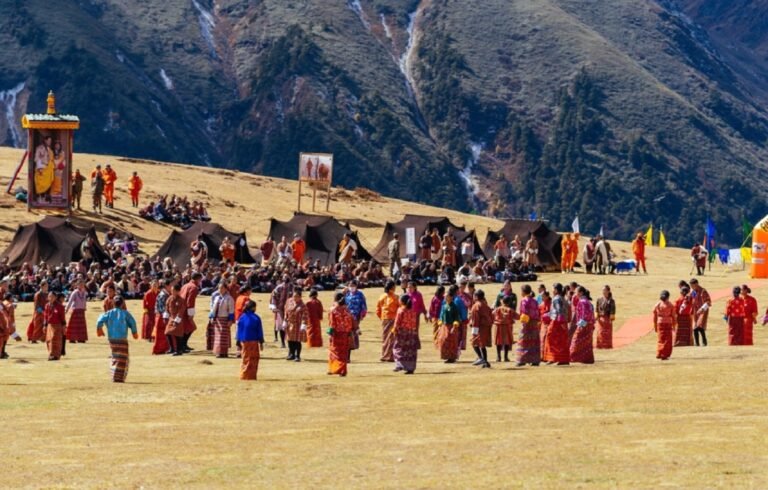
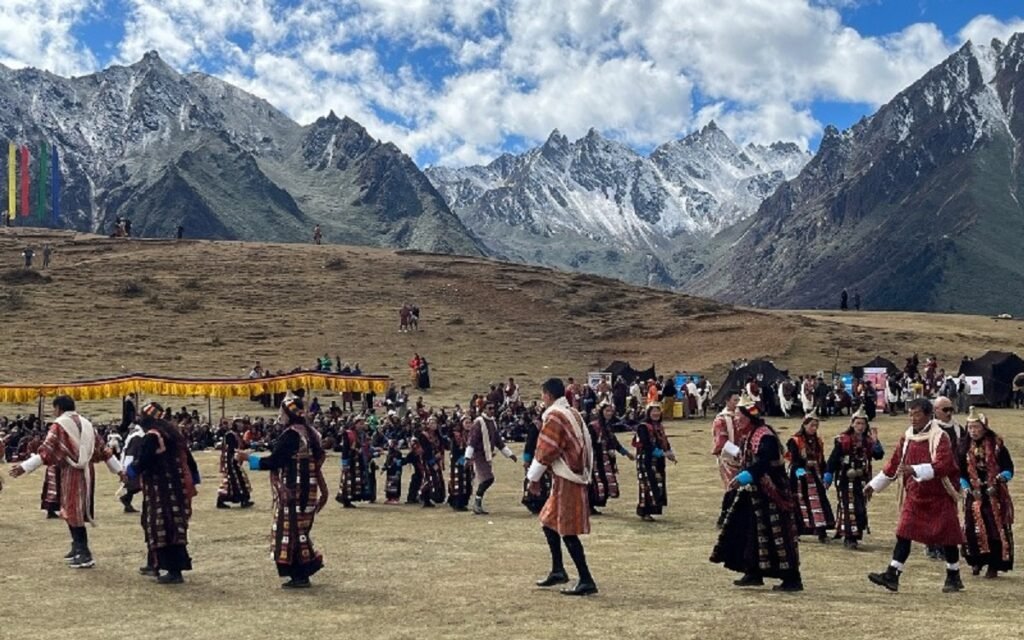
October is particularly rich in culture, featuring the Black Mountain Festival (5–6) in Trongsa, Jomolhari Mountain Festival (14–15) promoting highland resilience, and the Royal Highland Festival (23–24) uniting nomadic communities. The Snowman Race (24–28) challenges competitors through tough Himalayan terrains.
November concludes the year with conservation themes, highlighted by the Black-Necked Crane Festival (11) in Gangtey, celebrating migratory birds, followed by the Bhutan Bird Festival (13–15) in Tingtibi, reinforcing Bhutan’s ecological significance.
The festivals not only enrich the tourism experience but also serve as platforms for cultural expression and community engagement.