The rapid political ascent of Balendra Shah, from the mayor of Kathmandu to the prime minister of Nepal, has triggered an unprecedented surge of coverage across Indian media landscapes. Observers suggest that this fascination is driven by a unique blend of Shah’s youth appeal, his Madhesh roots, and a distinct religious identity that contrasts sharply with the traditional, older political guard of Nepal.
According to media analysts and academic observers, the “Shah phenomenon” represents more than just a change in leadership; it is being portrayed as a generational shift. Scholars from Tribhuvan University and the Indian Institute of Mass Communication note that Indian outlets—ranging from The Times of India to Aaj Tak—view Shah as a symbol of the “Gen Z wave” that is increasingly impatient with systemic corruption and unprincipled governance.
One of the primary drivers of this interest is Shah’s Madhesh origin. Historically, New Delhi has placed significant strategic importance on Nepal’s southern plains. His decision to launch his campaign from the religious hub of Janakpur, coupled with his high-profile prayers at the Janaki Temple, resonated deeply with India’s cultural and strategic circles. While Western media often focused on his background as a structural engineer and rapper, Indian media has pivoted toward his “pro-Hindu” image, viewing it as a potential “cultural glue” that could mend ties frequently strained under previous communist-led administrations.
However, the fascination is seasoned with a degree of caution. Indian journalists and diplomats remain curious about Shah’s diplomatic stance. His past nationalist rhetoric—specifically the display of a “Greater Nepal” map in his mayoral office and his threat to ban Bollywood films over the movie Adipurush—has not been forgotten. Analysts are keenly watching to see if Prime Minister Shah will adopt a pragmatic “reset” with New Delhi or continue the more confrontational nationalist approach seen under predecessors like K.P. Sharma Oli.
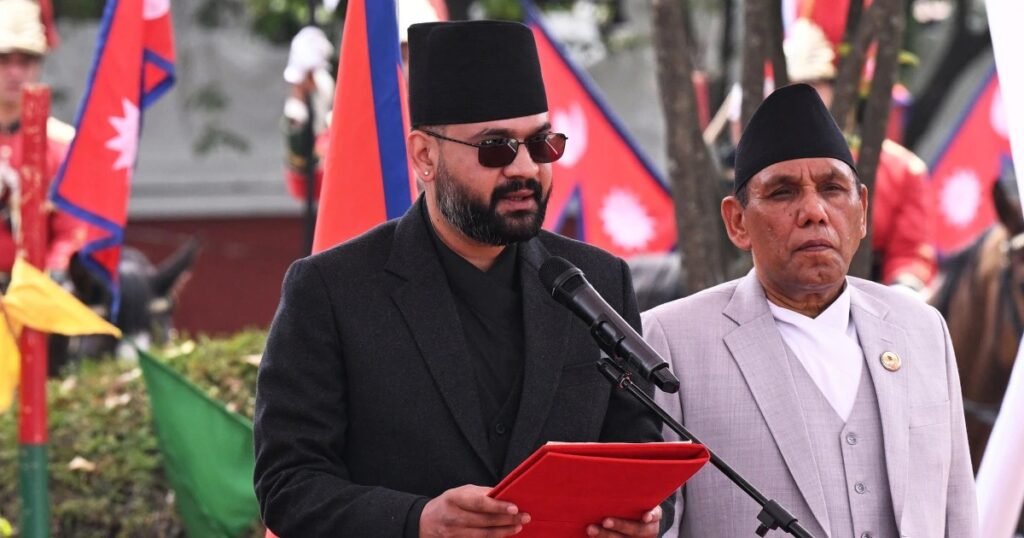
Ultimately, the Indian media’s narrative frames Balendra Shah as a “disruptor” of the long-standing Brahmin-Chettri Pahadi elite. His swearing-in ceremony, conducted with Vedic chants on the day of Ram Navami, was celebrated in some Indian circles as a “Raj Tilak,” signaling a new chapter in bilateral relations. Whether he will engage in the open, media-heavy style of Prime Minister Narendra Modi or maintain a more controlled persona remains a central question for observers in both capitals.