Nestled high in the Himalayas, the Kingdom of Bhutan has long been known for its isolation and its unique philosophy of Gross National Happiness. But as 2026 unfolds, this “Last Shangri-La” is finding itself at a geopolitical and economic crossroads. From a top-down democratic consolidation to shifting ties with global superpowers, Bhutan is navigating a world that is increasingly knocking on its mountain doors. Tonight, we take an in-depth look at a kingdom in transition. Bhutan’s journey from an absolute monarchy to a thriving constitutional democracy is a rare story of “top-down” reform. Under the guidance of the Wangchuck dynasty, which has held power since 1907, the transition began in earnest in 2008. Today, King Jigme Khesar Namgyel Wangchuck serves as the Head of State, while the day-to-day governance rests with Prime Minister Tshering Tobgay and the People’s Democratic Party, or PDP.
The PDP currently dominates the 47-seat National Assembly with 30 seats, leaving the remaining 17 to the opposition Bhutan Tendrel Party. While international observers consistently rate Bhutanese elections as “free and fair,” analysts note a growing trend of anti-incumbency. The electorate, disillusioned by the slow pace of socioeconomic reform, has shown little hesitation in swapping out leadership if results don’t follow promises. Economically, Bhutan is a rising star in the lower-middle-income bracket. Since graduating from the UN’s list of “Least Developed Countries” in 2023, the kingdom has seen robust GDP growth, forecasted to hit 6% in 2026. This growth is powered by three main pillars: hydropower, mining, and a carefully managed tourism sector.
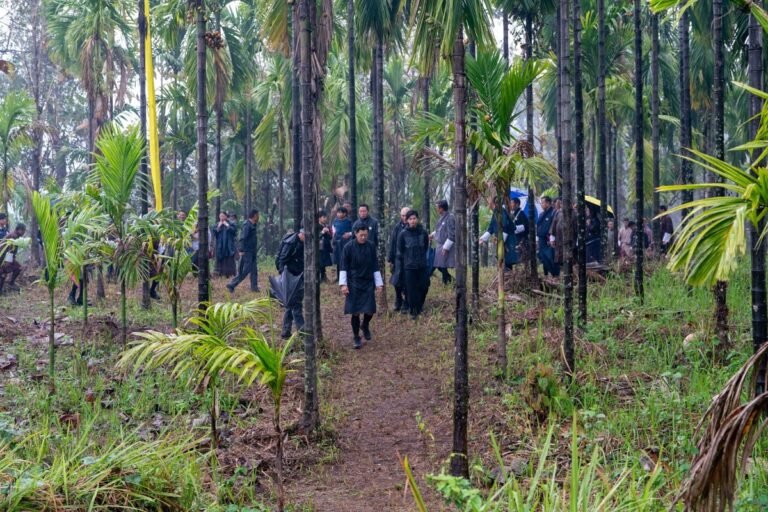
However, beneath these soaring figures lies a troubling social trend. High youth unemployment has triggered a significant “brain drain,” with many of Bhutan’s most skilled young workers migrating to Australia in search of better opportunities. This out-migration raises critical questions about the kingdom’s future workforce and its ability to achieve its goal of $5.9 billion in foreign direct investment by 2029. Bhutan remains a global leader in environmental conservation, boasting a status as a carbon-negative country with over 70% of its territory covered in forest. Yet, its geography makes it uniquely vulnerable. The World Bank warns that climate change poses “significant risks” to Bhutan’s hydropower-dependent economy, as glacial melts and unpredictable weather patterns threaten the very infrastructure that drives its wealth. While Bhutan celebrates its democratic progress, its human rights record remains under international scrutiny. In the late 1980s and early ’90s, the government implemented policies targeting the Lhotshampa—the ethnic Nepali, largely Hindu population in the south—labeling them a threat to cultural identity. This resulted in the forced eviction or voluntary flight of over 107,000 Lhotshampa to refugee camps in Nepal. While the United States has resettled over 75,000 of these individuals since 2008, the 119th U.S. Congress has recently introduced H.Res. 1093. This resolution urges the Bhutanese government to take responsibility for these evictions and move toward justice and repatriation. Externally, Bhutan remains inextricably linked to India. Under the 2007 Treaty of Friendship, India remains Bhutan’s primary strategic and economic partner. However, the kingdom’s lack of formal diplomatic ties with the “P5″—the permanent members of the UN Security Council—is a unique diplomatic stance.
Despite this, the U.S. has signaled a warming of ties. In 2025, the U.S. administration expressed a desire to value and strengthen “friendship with Bhutan.” This interest is driven largely by the Himalayan border tensions between India and China. As China continues to press territorial claims in Bhutan, U.S. policymakers are paying closer attention to this strategically vital buffer state. As Bhutan looks toward 2030, it faces a delicate balancing act: maintaining its ancient cultural soul while integrating into a globalized economy. For the King and the people of the Dragon Kingdom, the path forward is as steep and winding as the mountains they call home.