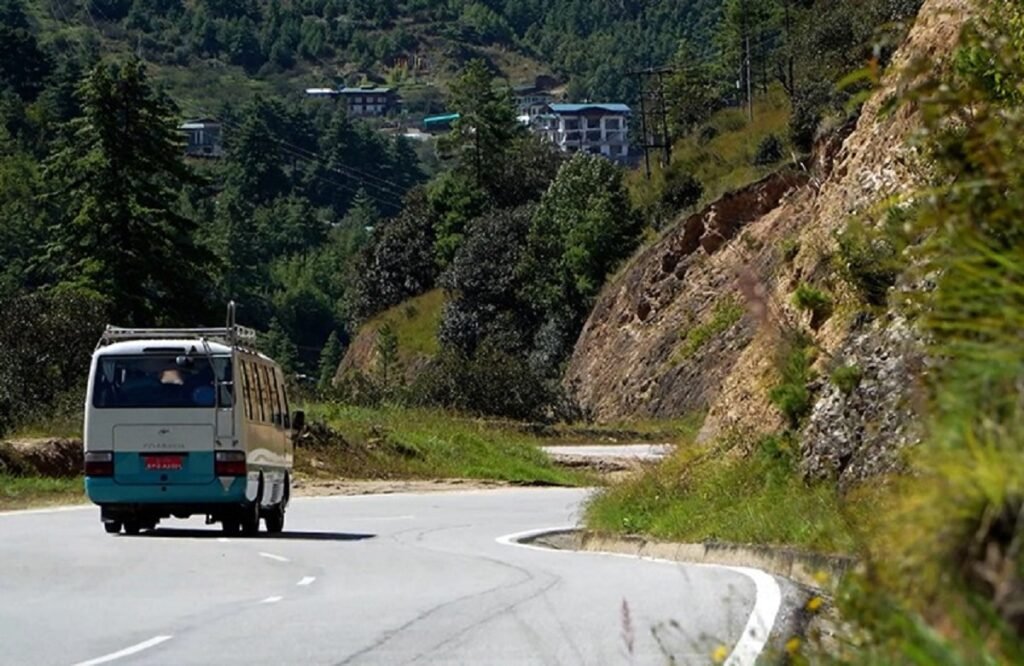
The Wangdue Phodrang-Thimphu Road corridor is facing growing pressure from extreme weather, with landslides, road damage and poor drainage affecting several stretches. The Ministry of Infrastructure and Transport says it is working on both long-term measures to strengthen the road and faster ways to respond when blockages occur.
For people travelling between Wangdue Phodrang and Thimphu, the highway is an important link. But heavy rain, unstable slopes and difficult mountain conditions continue to put pressure on the road.
“We never know when or where a disaster might occur. Last year, the rains started early, and this year, it began raining just as we started the work. One of the main challenges is drainage, as some roads do not have proper drainage systems,” said Karma Wangchuk, Secretary, MoIT.
He added that the ministry identifies high-risk areas by studying the soil, rocks and slopes along the roads. It also uses past records of landslides to decide which locations need attention first.Depending on the risk, measures such as retaining walls, rockfall barriers, drainage systems and planting vegetation are used to help stabilise slopes and protect roads.
Drainage is one of the areas being strengthened. Under its road drainage guidelines, drains are designed based on rainfall and water flow, while additional drainage is used to protect the road surface from water damage.
New and upgraded roads are also being designed to handle heavier rainfall. The ministry says drainage capacity is being increased by 20 to 25 per cent under its climate-resilient road guidelines.The department is also working on a system that can warn road users before a landslide happens. Rainfall and slope movement at high-risk sites are monitored in real time.
On emergency response, Karma Wangchuk said, “We have deployed engineers across the country and provided equipment to carry out emergency maintenance wherever roads are blocked. They work even at night, often without sleep. We also have 18 sets of Bailey bridge parts ready to help quickly restore damaged crossings.”
If machinery is not enough, private machines can be hired during emergencies. Relevant officials can also be sent to affected locations to speed up clearance.
Travellers can check road conditions through the Bhutan Road Watch App, the Department of Surface Transport Facebook page and other official messaging groups.
Updates include the location of a blockage, its cause, estimated clearance time and when the road reopens.