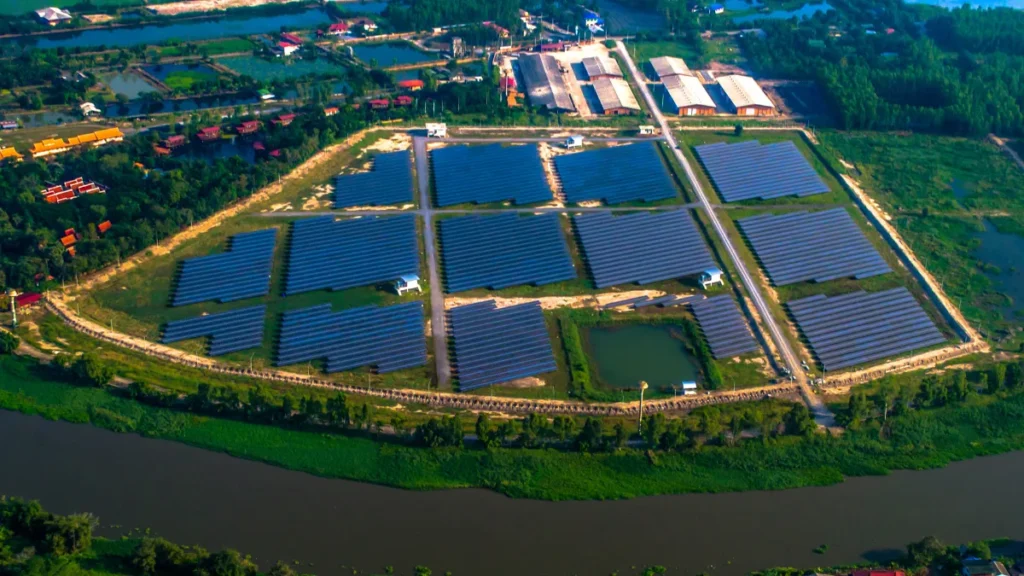
Engineer Rinzin Galley stands on a platform overlooking a former military shooting range on the edge of Bhutan’s capital Thimphu, now home to a gleaming field of solar panels.
With abundant waterways, Bhutan has long relied on hydroelectric power to meet its electricity needs and stay carbon negative — absorbing more planet-warming gases than it emits.
But demand is growing, and in winter, when rivers run low before the mountain melt arrives, Bhutan already relies on imported Indian electricity In Hydropowered Bhutan, Solar Starts To RiseA dog walking past solar panels at the Dechencholing solar farm in Bhutan’s capital city of Thimphu.Bhutan:
Engineer Rinzin Galley stands on a platform overlooking a former military shooting range on the edge of Bhutan’s capital Thimphu, now home to a gleaming field of solar panels.
With abundant waterways, Bhutan has long relied on hydroelectric power to meet its electricity needs and stay carbon negative — absorbing more planet-warming gases than it emits.
But demand is growing, and in winter, when rivers run low before the mountain melt arrives, Bhutan already relies on imported Indian electricity. Climate change is also threatening the future of the glaciers that feed those rivers, adding impetus to a push for energy diversification.
“Solar projects are booming,” said Rinzin, senior engineer at Norion Renewable Energy. The company’s biggest project to date is the Dechencholing solar farm on former military land, with an installed capacity of 4.45 megawatts (MW).
Dechencholing is one of several solar fields developed in recent years, including the country’s first mega project — Sephu, with over 22 MW capacity. That is relatively modest, especially compared to the vast solar fields installed in neighbouring China.
But it represents a new direction for Bhutan, where hydropower exports account for up to 15 percent of GDP, according to the World Bank.
“Our plans are to develop about 5,000 megawatts,” said Chhewang Rinzin, managing director of Druk Green Power Corporation, the country’s generation utility. Bhutan can currently produce around 3,700 MW from hydro, but that capacity falls around 80 percent during the winter, he said.
Winter demand has increased to 1,500 MW from 400 MW,creating a significant shortfall currently being met by electricity imports from India.