Bjoka Khoche is a historic traditional mansion associated with a noble lineage in Bjoka Gewog, Panbang Dungkhag (sub-district), Zhemgang, in the central part of Bhutan. The ancestral residence is approximately 50 kilometres from the Panbang town junction, depending on the route taken, and can be reached in about one and a half hours by road. The journey winds through dense subtropical forests and remote villages, offering visitors a glimpse of Bhutan’s rich natural landscape before arriving at the historic estate.
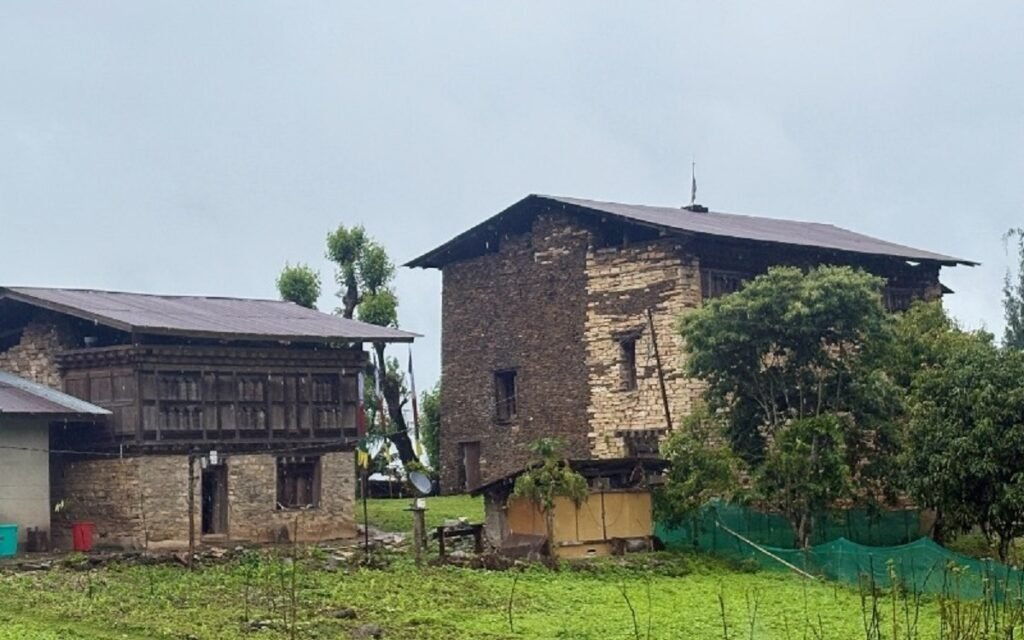
The three-storey mansion, built in the 18th century, stands as an important example of Bhutanese traditional architecture and reflects the region’s cultural heritage, craftsmanship, and historical significance.
Bjoka Khoche Manor has become a quiet attraction for both locals and visitors. With one half of its walls painted black and the other creamy white, the 18th-century residence of the Bjoka Khoche (nobility) remains an enduring symbol of heritage, having withstood the relentless test of time and the changing seasons.
Bjoka is one of the most remote villages in Zhemgang District. The area is renowned for its pristine subtropical forests, dramatic waterfalls, and rich bamboo craftsmanship.
The manor is considered one of the oldest privately owned traditional houses in Bhutan. The Khoche clan is a noble lineage historically believed to descend from Lhasey Tsangma, a Tibetan prince.
Built in two distinct styles, one half with large black stone slabs and the older section with smaller white stone slabs, the manor reflects stories of the past that are still preserved in local memory.
According to local tradition, the mansion has two distinct sections. The side built with larger stones was constructed by Bhutanese craftsmen, while the section built with smaller stones was the work of Assamese labourers, who used smaller rocks because large stones were scarce in the plains.