Much of the discussion around the introduction of the Goods and Services Tax (GST) in Bhutan has focused on changes in the prices of goods. While some items such as vegetables, fruits, cereals, medicines, and beef have become costlier by 5%, others like packaged foods, cars, poultry, and pork have seen price reductions. Since most goods were already taxed under the Bhutan Sales Tax (BST), GST mainly replaces the earlier system, except for essential items that remain zero-rated.
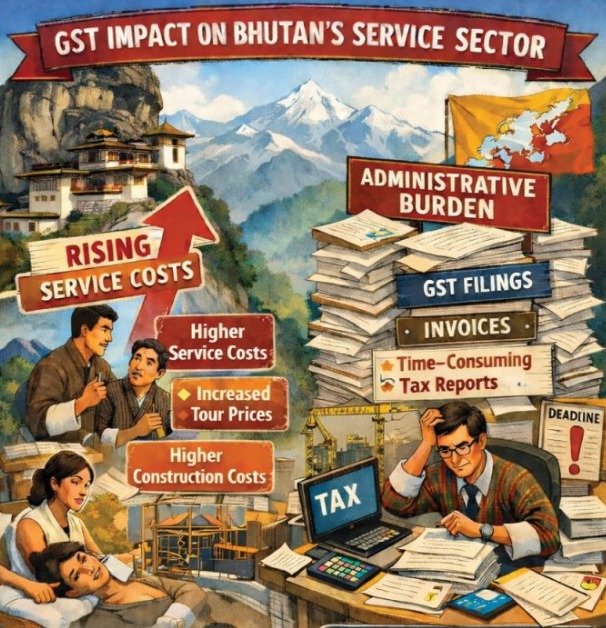
What has received less attention is the impact of GST on the service sector, which previously paid little or no BST. Under the new system, 1,544 service-related businesses are now required to charge 5% GST, making many services more expensive. This includes real estate transactions, construction services, and professional services such as legal work. Contractors and service providers must now charge GST even to government clients.
Beyond higher prices, service providers are concerned about compliance costs. Many small firms lack full-time accountants and face monthly filing requirements, increasing operating expenses. The Department of Revenue and Customs (DRC), however, maintains that GST will strengthen formality, fairness, and transparency, and benefit the economy in the long run.