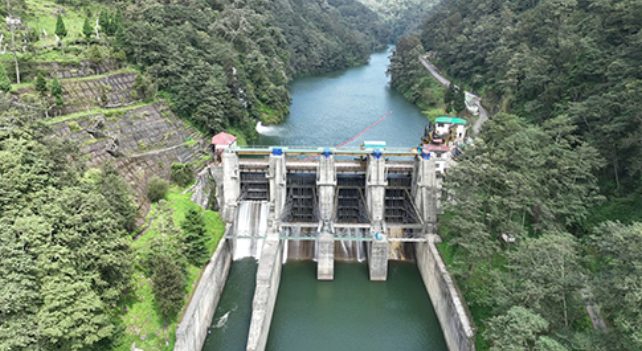
Agency: Hydropower has been the cornerstone of Bhutan’s economic development. Today, it contributes 41 percent of national income and approximately 13 percent of GDP, making it one of the most important export sectors in the country.
Beyond the revenue, it generates, hydropower has enabled industrial growth, supported infrastructure development, and ensured electricity access even in the most remote mountain communities, helping preserve Bhutan’s environment.
This remarkable achievement traces back to the vision of His Majesty The Fourth Druk Gyalpo Jigme Singye Wangchuck, who prioritized hydropower as a national development strategy from the early years of his reign. His foresight laid the foundation for Bhutan’s collaboration with India and the establishment of large-scale hydropower projects.
Reflecting on this legacy, Lyonpo Khandu Wangchuk, who served in the Council of Ministers and as a Prime Minister of the country from 2001 to 2002, said, “There were some small hydropower plants before. There was one at Jungzhina and one at Gida in Thimphu and one at Paro and another at Wangdue Phodrang, but these were all very small projects and could only be used domestically within the dzongkhags since the projects ranged from 200-300 kW.”
He said, “The first big plan His Majesty set up was the Chukha Hydropower Plant in the mid-70s. We need to keep in mind that His Majesty came to the throne in 1972. He worked with the Government of India. His Majesty must be given the credit for establishing this collaboration in hydropower with India, which has been very fruitful.”